
If you’re planning an event and trying to figure out the right ticketing setup, you’ve probably run into the term “general admission.” You’ve also probably noticed that nobody quite agrees on their definition. Some GA tickets mean standing room only, others, seated. Sometimes it means cheaper seats, which begs the question…are general admission tickets good?
Short answer: a general admission ticket gets one person into an event with no seat assigned. Kind of like how it used to be with Southwest Airlines, where attendees sit (or stand) is determined on a first-come, first-served basis once they’re inside.
But that doesn’t address the many (many!) questions remaining regarding this ticket type.
Organizers wonder if General Admission is the way to go for an event, and whether it should be combined with other ticket types like reserved seating or VIP.
This guide is geared toward explaining it all, including when reserved seating is the smarter call, how to sell tickets online and check in your guests, along with tips for keeping your general admission attendees organised.
General Admission, Defined
The phrase “general admission” means the ticket admits one person to the event with no seat tied to it. There’s no special seating, no access backstage. It’s a straightforward and easy ticket type and is a great fit for almost every kind of event.
You’ll see it called a few different things depending on the venue:
- General admission (seated): Attendees sit wherever they want once inside. First to arrive picks first. Common at school events, small theatres, and concerts.
- General admission (standing): The floor or main area is open standing room, and the ticket gets you in. Common at larger concerts and festivals.
- Standing room only (SRO): A subset of GA where seats are sold out and remaining tickets only allow standing.
- Festival or grounds admission: Outdoor events sell GA tickets that grant access to the entire grounds; attendees roam freely.
How Do General Admission Tickets Work?
The mechanics are pretty basic — which is part of the appeal:
- You sell or distribute the tickets ahead of the event, online , through retailers or sales people, and at the door (or all of the above). Each ticket is numbered so it can’t be duplicated.
- Attendees arrive on the day and present their ticket at the entry.
- Door staff verify and check the ticket in by scanning, tearing a stub, or marking a list.
- Inside the venue, attendees pick their own seats or spots. Doors usually open well before showtime so people have time to settle in.
- Premium positions go to early arrivals. That’s the trade-off: no guaranteed seat for a good price.
Are General Admission Tickets Always Standing?
This is the most common misconception, so worth being explicit: no. General admission just means seats aren’t assigned. Plenty of GA events have seating — school plays in a gym with chairs, fundraiser dinners with open tables, fairs with bleachers. Standing room only is a specific subset of GA, not the default.
Make sure you communicate this on your ticketing page. Something like, “General admission — seating available, first come first served” or “General admission — standing room only” will clear up any confusion.
Are General Admission Tickets Good?
For organisers, almost always yes. GA is one of the simplest, most cost-effective ticketing methods, and it works for the majority of events.
For attendees, it depends on what they’re looking for. GA is great if you want a low-cost ticket and aren’t picky about where you sit.
If you want the best of both worlds, sell GA tickets for the main floor and a reserved section at a premium.

General Admission vs. Reserved Seating
The two ticketing types solve different problems.
| General Admission | Reserved Seating | |
|---|---|---|
| Seat assigned? | No — chosen on arrival | Yes — printed on ticket |
| Pricing | Single price (or simple tiers) | Often tiered by location |
| Best for | Concerts, festivals, fundraisers, casual events | Theaters, formal galas, plated dinners, sporting events with assigned seats |
| Setup time | Fast — one ticket type | A little extra time — requires seat map and per-seat data |
| Crowd flow | Self-organising, doors open early | Predictable, attendees arrive closer to start |
| Premium revenue | Limited unless you sell tiers | Higher — charge more for better seats |
When General Admission Makes Sense
If your venue has no fixed chairs, stadium-style bench seating, or an open floor, GA is the way.
Alternately, if you’re serving a plated dinner, or have mixed seats (such as in a movie theatre), or if you want to charge a premium for front-row access, reserved seating is a smart approach.
That said, event ticketing is not an either/or situation. A lot of organisers sell a mixture of both, such as GA for the main floor, and a reserved section with a higher price point for VIPs or sponsors.
Pros and Cons of General Admission
Pros
- One ticket type and you’re open for business.
- Volunteers or staff don’t need to direct attendees to specific seats.
- A single price means a lower barrier to entry.
- Encourages early arrival, since people show up on time to claim a good spot.
Cons
- No guaranteed seats for VIPs or sponsors unless you reserve a separate section.
- Limited tiered-pricing revenue. You can’t easily charge $200 for the front row and $50 for the back.
- Lines form earlier and longer.
- Late arrivals get the worst spots. Some attendees won’t love this.
How to Sell General Admission Tickets Online
For most events, selling tickets online alongside printed tickets is the most effective option. Here’s the process:
1. Pick a ticketing platform built for GA events
There are a lot of things to consider when evaluating event ticketing software . For GA specifically, you’ll need a secure and efficient checkout process and a mobile-friendly interface. Your chosen platform should also make managing attendee check-in easy. Check whether or not your platform makes it easy for volunteers to scan tickets and access guest lists with or without wi-fi. Finally, closely examine ticket platform pricing. Look for transparency and do the math as it relates to percentage cuts and processing fees on tickets sold.
2. Build a strong event page
Your event page is doing most of the selling. Keep it focused:
- A clear, honest description of the event and what it’s for.
- The date, time, venue, and what GA means at your event (seated? standing? mixed?).
- Photos that show the vibe.
- Your branding — logo, colours, hero image.
3. Set the price (and pricing tiers, if any)
For most GA events, a single price point is the right call. If you’re offering reserved seating or VIP packages along with GA, resist the urge to create more than 5 tiers. This will help avoid decision fatigue and thus cart abandonment.
4. Promote it everywhere your supporters already are
Share the ticket link in email newsletters, social posts, group chats, and at every in-person moment your group already runs. Remember that links posted by volunteers in their own networks reliably outperform shares from an organisation’s account, so encourage everyone to pitch in!
Though online marketing is important, don’t neglect in-person. Marketing postcards, flyers, yard signs, and table tents are extremely effective at capturing interest and ticket sales.
5. Plan for paper ticket sales
Even if you’re selling online, you’ll have walk-ups. Additionally, there are people who prefer buying printed tickets in person from an outlet, or receiving their tickets in the mail. Since the last thing you want is to miss out on ticket sales, order a batch of printed tickets. You can keep a stack at the gate, and make them available for pre-purchase through your office or points of contact.
If you’re concerned about tracking online and IRL ticket sales, don’t be! Your event platform can handle both simultaneously.
6. Run a clean door
Open doors at least 30–60 minutes before showtime. Have one or two ticket-takers (or more, depending on event size) per entrance. If you’ve sold general admission alongside reserved seating and VIP packages, for VIPs, make sure it’s easy to differentiate between all three.
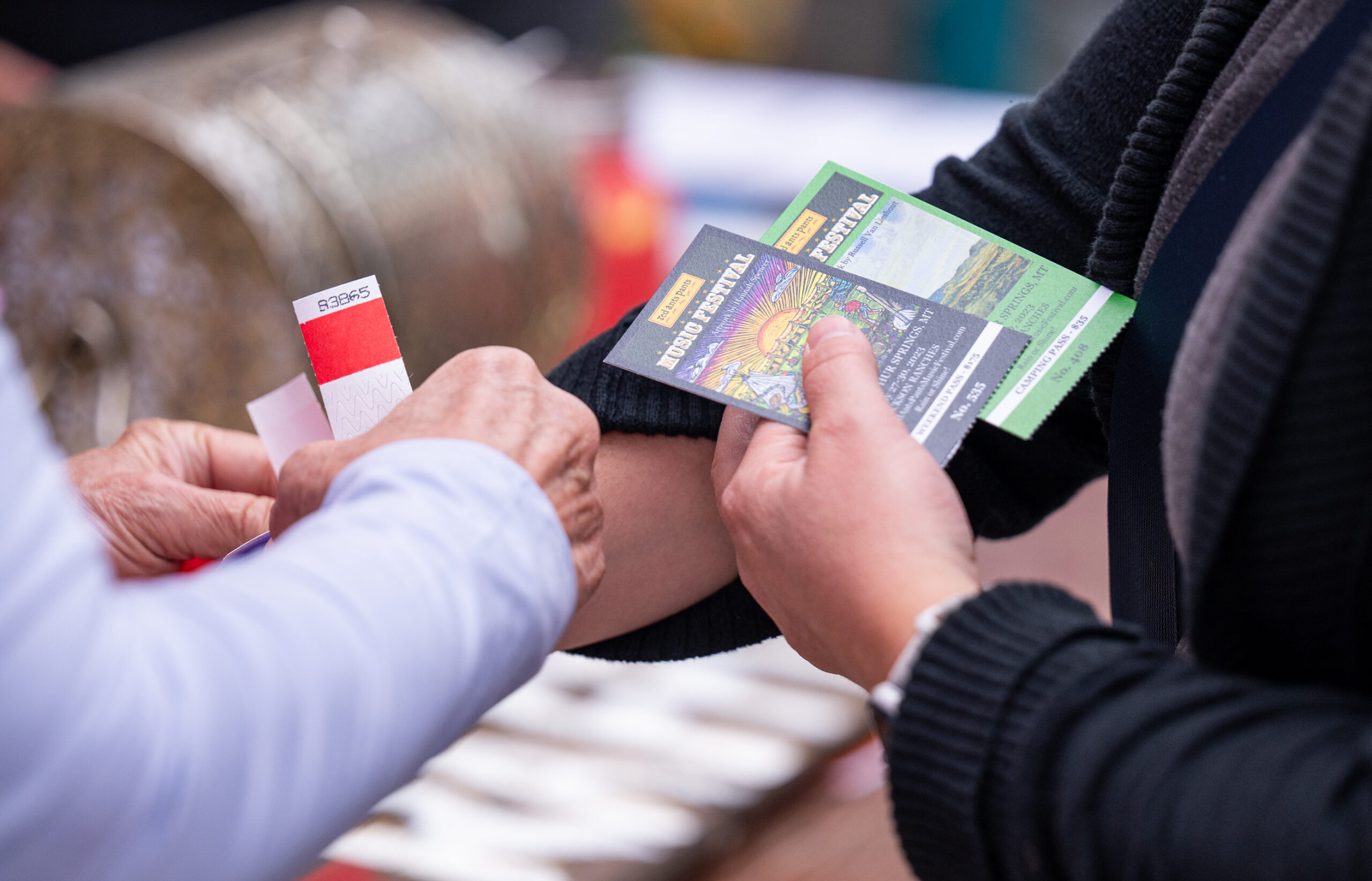
There are a few ways to do this. You could use Tyvek wristbands in differnet colours to differentiate between guests, and provide printed reserved seating tickets to those who paid for premium seats. Depending on your event’s complexity, you could provide VIP badges so that those attendees are identifiable at a glance and from a distance. Or you can do all of the above!
Ready to Run Your GA Event?
Whether you’re running a school fundraiser, a community concert, or a sporting event, general admission ticketing is usually the simplest, most affordable way to handle sales.
If you’re looking for a better way to sell tickets and manage your event, we’d love it if you gave Eventgroove a try. Our event ticketing platform is free for organisers, with low ticket-buyer fees, no hidden charges, and no contracts. Plus, we’re also online printers, so you can manage and print custom event tickets, VIP badges, wristbands, and flyers all in one place.



0 Comments